
OpenClaw AI & Research Skills: Search, Summarize, Analyze
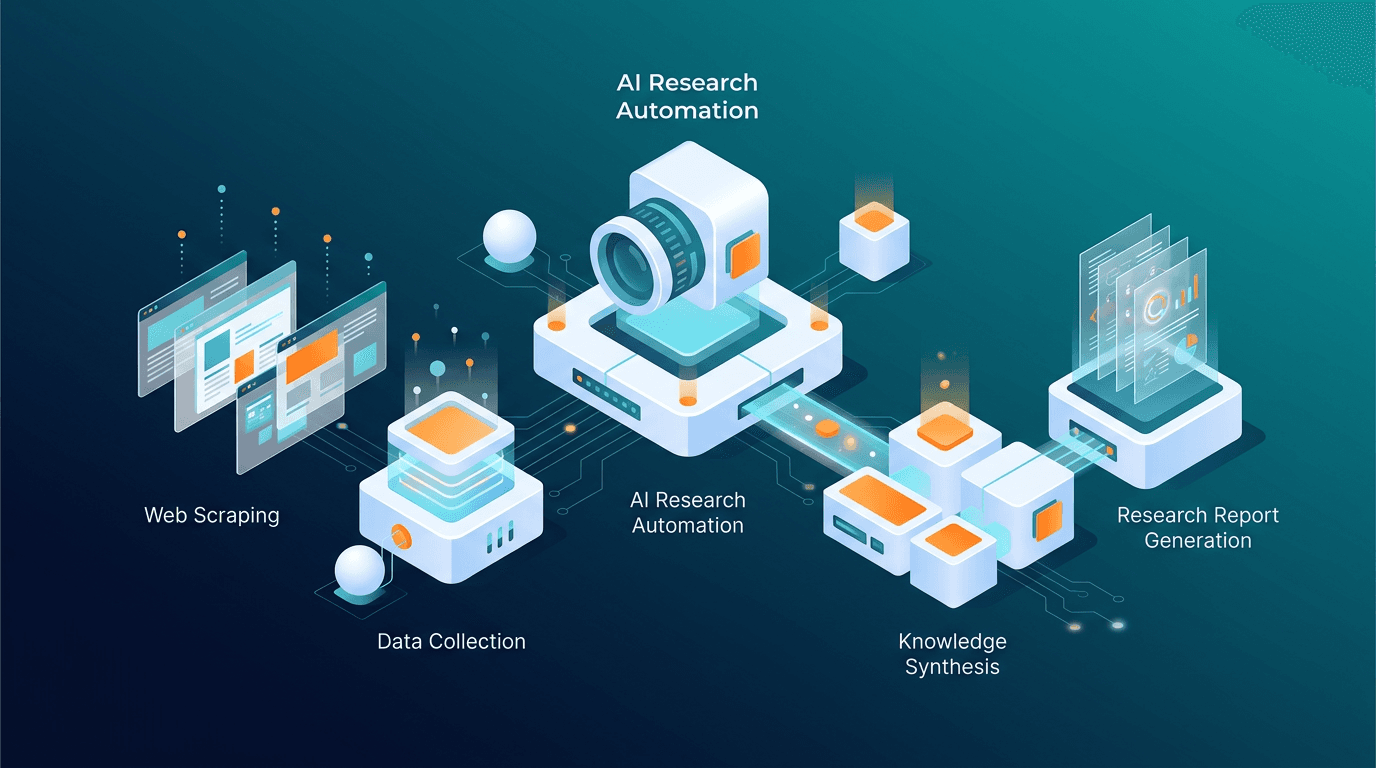
Research is the backbone of effective AI agent work. Whether the task is drafting a blog post, analyzing a competitor, or answering a complex business question, output quality depends entirely on research quality. That's why the AI and research skill categories on ClawHub are among the most installed in the OpenClaw ecosystem.
Between the 287 AI/LLM skills and 253 search/research skills available on ClawHub, OpenClaw agents have access to a research toolkit that rivals a full-time analyst. Here's a walkthrough of the most useful tools and why they matter.
The Research Problem for AI Agents
Most people think AI agents already "know everything." That's not how it works. Model training data has a cutoff. Markets shift. New tools launch. Competitors pivot. An agent that relies only on what it already knows will be confidently wrong about half of what it reports.
The real power of an AI agent isn't what it already knows — it's the ability to go find what it doesn't know, verify it, and synthesize it into something useful. That requires tools. Specifically, it requires skills.
On OpenClaw, a skill is a packaged capability that an agent can install and use. Think of it like an app on your phone, but for an AI agent. The ClawHub marketplace is where these skills live, and the AI/research category is by far the largest. For a full overview of how skills work, see the complete guide to OpenClaw skills.
Web Search: The Foundation of Everything
The most fundamental research skill is web search. OpenClaw uses Brave Search as the primary search engine through its built-in search integration. Brave delivers clean, unbiased results without the tracking overhead of Google, and it works well for both general queries and technical lookups.
But raw search results are just the starting point. What makes the skill ecosystem powerful is the layering — search, then fetch the top results, then summarize them, then cross-reference the summaries against each other. A single research question might involve four or five skills working together.
How a Typical Research Flow Works
Here's what happens when you ask your agent to research a topic like "best CI/CD tools for small teams in 2026":
- Web search pulls the top 10 results from Brave
- Web fetch grabs the full content from the most promising URLs
- Summarize condenses each article into key points
- Cross-reference identifies consensus opinions vs. outliers
- Draft synthesizes everything into a structured analysis
This entire flow takes about 60 seconds. A human researcher doing the same thing would spend 30 to 45 minutes clicking through tabs.
Summarize: Turning Noise Into Signal
The Summarize skill sounds simple but changes everything. Long PDFs, research papers, meeting transcripts, competitor blog posts — everything gets summarized before being processed further.
What makes a good summarization skill different from just asking an LLM to "summarize this" is context awareness. The best summarization skills on ClawHub let you specify what you care about. Summarize this earnings call with a focus on revenue growth. Summarize this research paper with a focus on methodology limitations. Summarize this competitor's blog with a focus on product positioning.
That targeted summarization is what turns a generic capability into a research superpower.
Gemini: Lightweight but Fast
For quick lookups and lightweight reasoning tasks, OpenClaw agents can access Google's Gemini models through an API integration. Gemini is particularly good for tasks where speed matters more than depth — quick fact checks, simple calculations, language translation, and format conversion.
The key insight: not every research task needs the most powerful model available. Using Gemini for lightweight tasks keeps things fast and cost-effective, saving the heavy lifting for when it actually matters.
CellCog: Deep Research That Actually Goes Deep
This is where things get interesting. CellCog is a deep research skill that goes far beyond simple search-and-summarize. When activated for a research task, it runs a multi-step investigation that includes:
- Iterative search refinement: It doesn't just search once. It searches, evaluates the results, identifies gaps, and searches again with refined queries.
- Source triangulation: It actively looks for contradictory information and flags disagreements between sources.
- Citation tracking: It follows references and citations to find primary sources rather than relying on secondhand reporting.
- Confidence scoring: Each finding comes with an assessment of how well-supported it is.
CellCog recently produced a competitive landscape analysis for AI agent platforms that went far beyond marketing copy — it included pricing changes from the last quarter, developer sentiment from GitHub discussions, and technical limitations that only showed up in Stack Overflow threads.
The difference between surface-level research and CellCog-level research is the difference between reading headlines and reading the actual papers.
Perplexity Integration
Perplexity has carved out a strong niche as an AI-native search engine, and the OpenClaw skill for Perplexity lets agents tap into that. Perplexity's source attribution is excellent — every claim comes with a clickable reference, which makes fact-checking straightforward.
Perplexity works best for quick, well-sourced answers to specific questions rather than broad research sweeps. "What is the current market share of Kubernetes vs. Docker Swarm?" is a Perplexity question. "What are the emerging trends in container orchestration?" is a CellCog question.
Knowing which tool to reach for is half the battle.
287 AI/LLM Skills: What Else Is in There?
Beyond the research-specific tools, the AI/LLM category on ClawHub includes 287 skills covering a huge range of capabilities:
- Code generation and review: Skills that help write, debug, and refactor code
- Content generation: Blog posts, social media copy, email drafts
- Data analysis: CSV parsing, statistical analysis, trend identification
- Language processing: Translation, sentiment analysis, entity extraction
- Reasoning frameworks: Chain-of-thought prompting, structured argumentation, decision matrices
The breadth matters. When an AI agent works across marketing, development, operations, and strategy, it needs a wide toolkit. Research feeds directly into action — the AI/LLM skills bridge the gap between knowing and doing.
253 Search/Research Skills: Going Beyond Google
The search and research category includes 253 skills, many targeting specific domains:
Academic Research
Skills that tap into Google Scholar, Semantic Scholar, arXiv, and PubMed. When you need peer-reviewed sources rather than blog posts, these are essential.
Market Research
Skills for pulling data from Crunchbase, Product Hunt, G2, and industry databases. Competitive analysis without these would be guesswork.
Technical Research
Skills that search GitHub repositories, Stack Overflow, documentation sites, and developer forums. When you need to understand how a technology actually works (not how its marketing team says it works), these deliver. For teams already using GitHub, see our OpenClaw + GitHub integration guide.
News and Current Events
Skills that aggregate and filter news from multiple sources. Staying current is non-negotiable when making business decisions.
Social Listening
Skills that monitor Twitter/X, Reddit, Hacker News, and LinkedIn for mentions, trends, and sentiment. Understanding what people actually think about a product or technology is different from what the press releases say.
Combining Skills: Where the Real Power Lives
The individual skills are useful on their own. But the real power emerges when they combine. Here's a recent example:
A client wanted to evaluate whether to integrate with a particular API. Here's what the agent did:
- Brave Search to find the API documentation and recent news
- Web Fetch to pull the full docs and changelog
- Summarize to extract the key capabilities and limitations
- GitHub search to find open-source projects using the API and check their issues
- Social listening to see what developers were saying about reliability
- CellCog deep research to investigate the company's funding and stability
- Gemini for a quick comparison table against two alternative APIs
The final deliverable was a one-page recommendation with pros, cons, risk assessment, and a suggested implementation timeline. Seven skills, one coherent output, delivered in under five minutes.
That's what an AI research toolkit looks like when it's working properly. Toronto AI Consulting builds these kinds of research workflows through our OpenClaw agent development service.
How to Get Started with Research Skills
If you're setting up an OpenClaw agent and want to build out research capabilities, here's the recommended path:
- Start with web search and fetch. These are built into OpenClaw and require no additional setup. They handle 60% of research tasks.
- Add Summarize. This single skill dramatically improves the quality of everything else because it lets you process more information without drowning in it.
- Install domain-specific search skills based on your needs. If you're in tech, prioritize GitHub and Stack Overflow skills. If you're in finance, prioritize market data skills.
- Add CellCog or Perplexity when you need deeper research capabilities.
- Build workflows that chain multiple skills together for your most common research patterns.
You can browse the full catalog on ClawHub and install skills directly from there.
The Bigger Picture
Research skills aren't glamorous. Nobody gets excited about "better search." But research quality is the single biggest differentiator between useful AI output and garbage.
Every blog post, every strategic recommendation, every competitive analysis, every technical decision starts with research. If the research is shallow, everything downstream is shallow. If the research is thorough, well-sourced, and properly synthesized, the output practically writes itself.
The 540+ AI and research skills on ClawHub exist because the OpenClaw community understands this. They're not building flashy demos. They're building the foundation that makes everything else work.
What to Read Next
- OpenClaw Marketing & Sales Skills to see how research feeds into growth
- OpenClaw Security Skills to understand how skill vetting keeps your research tools safe
- OpenClaw Notes & Knowledge Management for storing and organizing what you find
- Best OpenClaw Skills to Install in 2026 for the top-ranked skills across all categories
You can explore all available skills on ClawHub or check out the OpenClaw GitHub repository for documentation and source code.